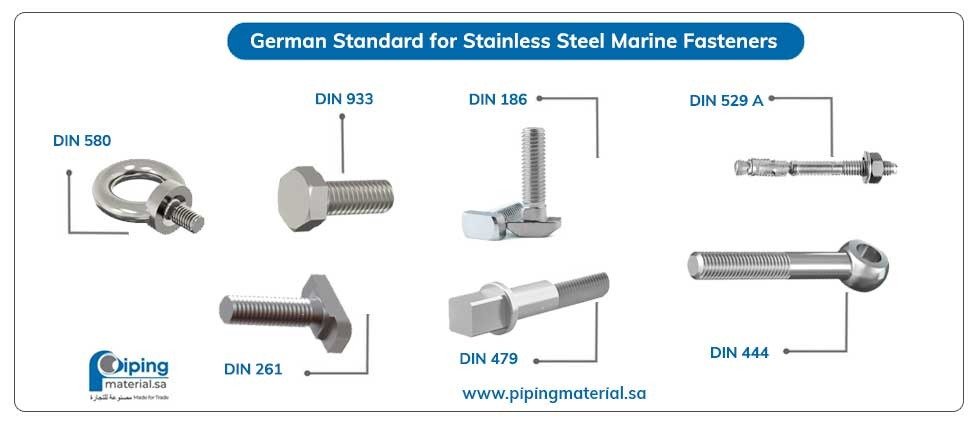
Duplex Fasteners: Why Strength and Corrosion Resistance Aren’t Complacent Trade-offs

A common dilemma faced in marine and processing industries is whether to pick a fastener based on its strength or select one based on its ability to withstand the environmental toll of years of exposure to salt water and chemicals, along with pressure cycling. Engineers were able to address the dilemma with the introduction of duplex fasteners.
If you have been on the site of offshore oil and gas platforms, desalination plants, or chemical processing plants, you will appreciate the harshness these environments pose on conventional fastener systems. A bolt that fails in a low-stakes application can be a major disaster in the joint of a high pressure pipeline.
Why Choose Duplex?
Duplex Fasteners combine a microstructure that is about 50% ferritic and 50% austenitic. This balance makes duplex fasteners superior in harsh conditions where conventional stainless fasteners fail.
This balance offers the following benefits:
- Enhanced tensile strength, meaning smaller fasteners can do the same job as larger ones.
- Resistance to chloride-induced stress corrosion cracking.
- Resistance to pitting and crevice corrosion.
When Engineers Need Duplex Fasteners
Duplex fasteners are primarily found in critical failure expensive areas such as:
- Oil and gas offshore platforms
- Saltwater and stagnant bulk brine Desalinization plants
- Chemical processing with aggressive ion media
- Standard stainless fasteners for structural construction in coastal regions are likely to corrode prematurely.
A maintenance engineer at a processing plant on the Gulf once said switching their flange bolts from the usual 316 stainless to duplex fasteners reduced the rate of replacement by more than 50%. This is a significant advantage for maintenance because the plant had fewer shutdowns to replace the bolts.
Standards and Specifications
Sourcing teams looking at duplex fasteners should be able to check a few standards and grades before making a purchase:
| Standard/Grade | Use |
| UNS S31803 / S32205 | Normal duplex fasteners |
| UNS S32750 (Super Duplex) | High chromium and molybdenum fasteners for very harsh environments |
| ASTM A276 / A479 | Standards that come up in bar stock |
| NACE MR0175 | Only if resistance to sour service is a requirement |
Since duplex and super duplex fasteners are not interchangeable, it is best to ask suppliers what standards their fasteners adhere to.
A Few Words About Common Selection Errors
A mistake that occurs more frequently than it should is assuming duplex fasteners can be used anywhere a fastener in stainless steel is used. Duplex fasteners are not always needed, and more frequently than not, they are more expensive than 304 or 316 stainless. A more sensible option is to match the grade to the exposure conditions that are actually relevant, such as the level of chloride, the temperature, and any potential pressure cycling, rather than over-specifying out of concern.
Thoughts to Conclude
Selecting the correct fastening system is not about selecting the material with the highest strength that sounds the best in the specifications, it is about correctly addressing the mechanical and corrosion issues over the life of the components, which in many cases will be many years. When considering applications that regularly expose the fasteners to saltwater, aggressive chemicals, or impart on the fasteners significant structural loading, duplex fasteners, in most cases, are well worth their incremental cost.