
How BIM Modeling Services and AI Are Transforming the Construction Industry
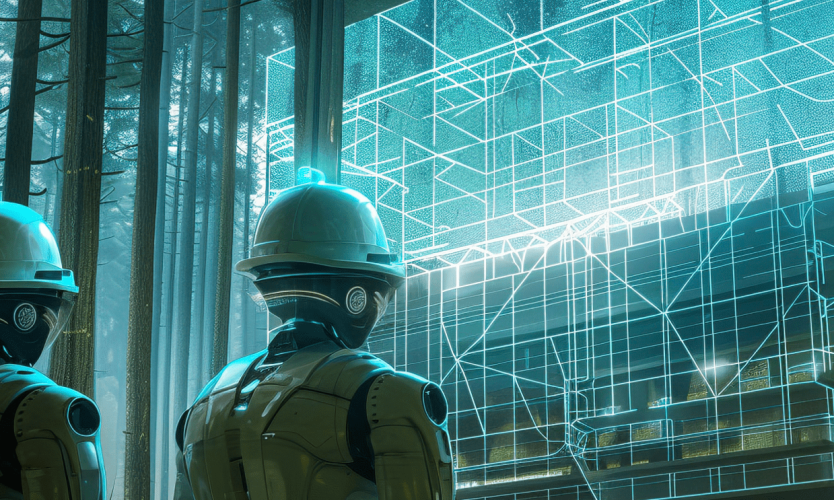
The construction industry is undergoing a major digital transformation. From planning and design to project execution and facility management, modern technologies are helping construction companies improve efficiency, reduce costs, and deliver projects with greater accuracy. Two technologies playing a particularly important role in this transformation are BIM modeling services and AI in construction industry applications.
Together, BIM and artificial intelligence are creating smarter workflows, improving decision-making, and changing how construction projects are planned and managed.
Understanding BIM Modeling Services
Building Information Modeling (BIM) is a digital approach that allows architects, engineers, contractors, and other stakeholders to create and manage detailed digital representations of buildings and infrastructure.
BIM modeling services go beyond traditional 2D drawings by creating intelligent 3D models containing valuable information about building components, materials, dimensions, quantities, and relationships. These models can be used throughout the entire project lifecycle.
BIM can support architectural design, structural engineering, MEP coordination, quantity estimation, clash detection, construction planning, and facility management. By providing a centralized digital model, BIM helps project teams collaborate more effectively and identify potential issues before they become expensive problems on-site.
The Growing Role of AI in the Construction Industry
Artificial intelligence is becoming another powerful technology within the construction sector. The use of AI in construction industry workflows enables companies to analyze large volumes of data, automate repetitive activities, predict potential risks, and make more informed decisions.
AI-powered solutions can analyze project schedules, costs, site conditions, and historical project data to identify patterns and provide useful predictions. For example, AI can help project managers anticipate potential delays, optimize resource allocation, and identify risks that might otherwise go unnoticed.
Computer vision is also being used to monitor construction sites. Cameras and AI algorithms can analyze site images and videos to identify safety concerns, track progress, and detect deviations from planned construction activities.
How BIM and AI Work Together
The real potential comes from combining BIM with artificial intelligence. BIM provides structured project information, while AI can analyze that information and generate insights.
For example, an AI system can analyze a BIM model to identify design conflicts, evaluate different construction scenarios, or optimize material requirements. Instead of relying entirely on manual analysis, project teams can use AI-assisted workflows to make faster and more accurate decisions.
This combination can also improve project scheduling. BIM models can be integrated with construction schedules to create 4D BIM environments, while AI can analyze project data and suggest improvements to sequencing and resource allocation.
Benefits for Construction Companies
Adopting BIM modeling services and AI technologies can provide several important benefits.
- Improved Accuracy:
Detailed BIM models reduce errors associated with traditional drawings and help teams understand complex building systems before construction begins. - Better Collaboration:
BIM creates a shared digital environment where architects, engineers, contractors, and clients can coordinate more effectively. - Reduced Project Costs:
Early clash detection and better planning can minimize rework, material waste, and costly construction changes. - Enhanced Safety:
AI-powered monitoring systems can identify unsafe conditions and support proactive safety management on construction sites. - Faster Decision-Making:
AI can process large amounts of project information quickly, helping managers make data-driven decisions. - Better Resource Management:
AI can help optimize labor, equipment, and material allocation, improving overall project productivity.
Future Trends in BIM and AI
The future of construction technology is likely to become increasingly automated and data-driven. AI-powered BIM platforms may provide more advanced predictive analytics, automated design optimization, and real-time project monitoring.
Digital twins are another important development. By connecting BIM models with real-world data from sensors and connected devices, construction and facility teams can create digital representations that reflect the current condition of physical assets.
Generative AI could also influence architectural and engineering workflows by helping professionals explore multiple design alternatives based on factors such as cost, sustainability, structural requirements, and available space.
As these technologies mature, construction professionals will increasingly focus on interpreting data and making strategic decisions rather than performing repetitive manual tasks.
Conclusion
The construction industry is moving toward a more connected, intelligent, and efficient future. BIM modeling services provide the digital foundation for better visualization, coordination, and project information management, while AI in construction industry applications bring advanced analytics, automation, and predictive capabilities to construction workflows.
Companies that adopt these technologies can improve project accuracy, reduce waste, enhance collaboration, and manage risks more effectively. As BIM and AI continue to evolve, their integration will become an increasingly important part of successful digital construction strategies.
For construction companies looking to remain competitive, embracing BIM and artificial intelligence is no longer simply about adopting new technology—it is about building a smarter and more efficient way to design, construct, and manage the built environment.