Scaling WordPress the Smart Way: Multi Regions WordPress Cluster & Top WordPress Cluster Providers in India
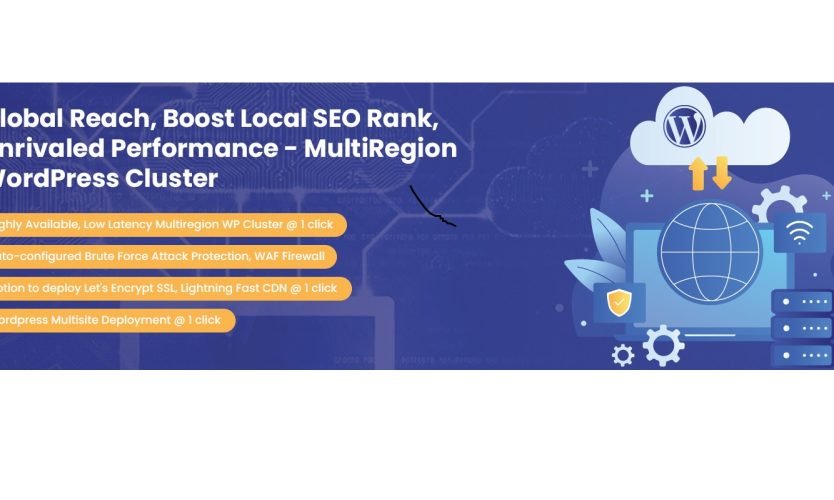
In today’s digital era, website performance isn’t just a “nice-to-have” — it’s a business differentiator. Whether you run an e-commerce store, content hub, corporate site, or a global blog, visitors expect pages to load in milliseconds regardless of their location. This is where the concepts of a Multi Regions WordPress Cluster and strong WordPress Cluster Providers in India become not only relevant but essential for high-traffic and enterprise-grade WordPress deployments.
What is a Multi Regions WordPress Cluster?
A Multi Regions WordPress Cluster refers to a setup where your WordPress website runs simultaneously across multiple geographic regions, such as Asia, Europe, and the Americas. Instead of hosting your website on a single server in one location, a multi-region cluster:
- Distributes traffic to the nearest data center
- Improves speed and user experience
- Reduces dependency on any single point of failure
- Enhances fault tolerance and uptime
- Supports scalable growth
Imagine a visitor from Tokyo accessing your site — instead of routing traffic all the way to a server in Mumbai or London, your infrastructure serves them from the closest regional node. That shortens the data path, significantly reducing latency and load times.
Why Your WordPress Site Needs a Multi Regions Cluster
Here are compelling motivations for adopting a multi-regional WordPress cluster:
- Global Audience, Local Performance
If your audience spans continents, serving content locally improves engagement and retention. - SEO Benefits
Fast page load times are a known ranking factor in Google’s search algorithm. - Higher Uptime
By distributing servers across regions, your site can continue functioning even if one cluster fails. - Security & Compliance
Some regions require local data residency — multi-regional setups help you comply with such legal requirements.
Key Components of a Multi Regions WordPress Cluster
A typical architecture looks like this:
- Global Load Balancer
Distributes traffic to different regions based on proximity and server health. - Regional WordPress Instances
Often containerized (e.g., Docker) or deployed on auto-scaling groups. - Centralized Database / Replicated DB
Using replication techniques (primary-secondary, multi-master) for data consistency. - Content Delivery Network (CDN)
Caches static assets (images, CSS, JS) at edge locations worldwide. - File Storage Sync
Tools like S3, object storage, and synchronization services ensure uploads (images, media) are accessible from any region.
Setting this up requires expertise — which brings us to one of today’s most important topics:
WordPress Cluster Providers in India
India is emerging as a major hotspot for WordPress hosting — not just for local businesses, but for global operations seeking performance and cost efficiency. Here are some noteworthy WordPress Cluster Providers in India:
1. Cloudways
An easy-to-use platform that lets you choose cloud providers like DigitalOcean, AWS, and Google Cloud, optimized for WordPress clusters. Cloudways supports horizontal scaling and automated backups — ideal for growing WordPress apps.
2. Kinsta
Though globally recognized, Kinsta has strong infrastructure footprints in Asia. With managed WordPress hosting powered by Google Cloud, they simplify clustering with intelligent load balancing and regional deployments.
3. WP Engine
Known for enterprise-level clustering and performance tools, WP Engine offers global data centers and excellent support for scaling WordPress applications.
4. DigitalOcean (Partnered Providers)
DigitalOcean’s droplets and Kubernetes engines form the backbone for many Indian WordPress clusters through managed partners. These solutions allow developers to craft true multi-region stacks.
5. Local Indian Cloud Partners
There’s a rising class of Indian cloud consultancies and managed hosting firms who specialize in WordPress clusters using AWS, Azure India, or GCP Mumbai region nodes.
While not all Indian providers advertise “multi regions cluster” as a service, many set it up through cloud services and DevOps support. Pairing a local provider’s expertise with global cloud infrastructure gives the best of both worlds — cost-efficiency and performance.
Challenges with Multi Regions WordPress Clusters
Although powerful, multi regional setups aren’t plug-and-play. Common challenges include:
- Database Synchronization
Ensuring data consistency without performance lag. - Session Management
Maintaining user state across regions. - DNS and Latency Routing
Configuring global load balancing (e.g., AWS Route 53, Cloudflare Load Balancer) properly. - Cost Management
More infrastructure often means higher costs, so optimization is key.
That’s why choosing the right hosting provider and architecture strategy — particularly ones versed in WordPress clustering — is essential.
Tips for Choosing the Right WordPress Cluster Provider
When evaluating WordPress Cluster Providers in India, consider:
- Infrastructure Reach
Does the provider offer servers/CDN endpoints near your users? - Support Quality
24/7 assistance with scaling issues and disaster recovery is invaluable. - Security Features
DDoS protection, firewalls, and regular patching must be standard. - Pricing and Transparency
Look for predictable pricing that scales with traffic. - Flexibility
Ability to integrate with external tools like Redis, ElasticSearch, and advanced caching.
Conclusion
A Multi Regions WordPress Cluster is no longer reserved for Fortune 500 companies — it’s viable for small and medium businesses that demand speed, reliability, and global performance. With emerging WordPress Cluster Providers in India, businesses have localized support, international cloud reach, and scalable options to power their digital presence.