Understanding API 5L X52 Pipe and API 5L X65 Pipe: A Complete Guide
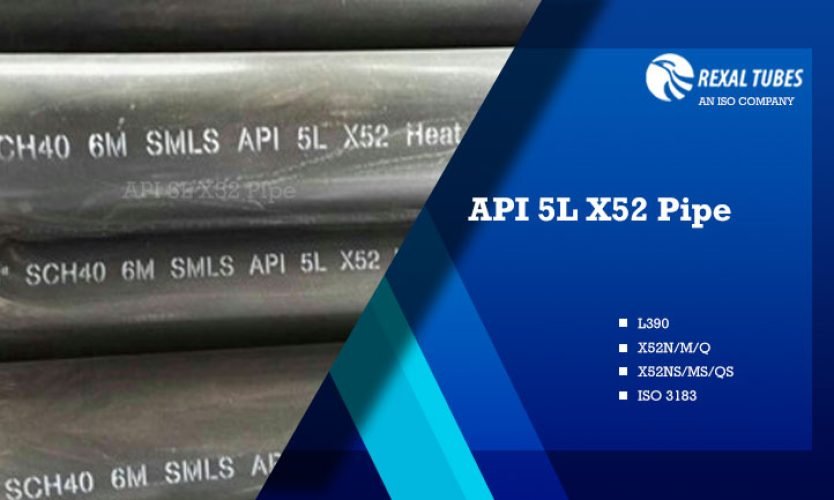
In the world of industrial piping and energy infrastructure, material quality and performance are critical factors that directly impact safety, durability, and efficiency. Two of the most widely used line pipe grades in the oil, gas, and water transmission industries are API 5L X52 Pipe and API 5L X65 Pipe. These pipes are manufactured under the American Petroleum Institute (API) 5L specification, which sets standards for seamless and welded steel line pipes used in pipeline transportation systems.
Both grades are known for their strength, reliability, and adaptability in various demanding environments. However, they differ in mechanical properties and ideal applications. Understanding these differences helps engineers, project managers, and procurement teams choose the right pipe for their specific needs.
What is API 5L Specification?
The API 5L specification is a globally recognized standard for steel line pipes used in the transportation of oil, natural gas, and water. It ensures that pipes meet strict requirements for chemical composition, mechanical strength, testing, and manufacturing processes. Pipes under this specification are available in multiple grades, with X52 and X65 being among the most popular.
The “X” in the grade name indicates the minimum yield strength in thousands of pounds per square inch (PSI). For example, X52 has a minimum yield strength of 52,000 PSI, while X65 has 65,000 PSI. This strength difference plays a significant role in determining the pipe’s performance in high-pressure and heavy-load conditions.
Features of API 5L X52 Pipe
API 5L X52 Pipe is widely used in medium-pressure pipeline projects and offers a balanced combination of strength, ductility, and affordability. Its mechanical properties make it suitable for a broad range of industrial and commercial applications.
Key features include:
- Minimum yield strength of 52,000 PSI
- Excellent weldability and formability
- Good resistance to corrosion when properly coated
- Cost-effective solution for standard pipeline projects
- Suitable for both onshore and offshore installations
Because of its moderate strength level, API 5L X52 Pipe is commonly used in oil and gas pipelines, water transmission systems, structural supports, and mechanical engineering projects. Its flexibility and ease of fabrication also make it a preferred choice for projects where complex pipe routing is required.
Features of API 5L X65 Pipe
API 5L X65 Pipe is considered a high-strength line pipe designed for demanding environments where higher pressure and heavier loads are expected. It is frequently chosen for large-scale infrastructure projects and deep-sea pipeline systems.
Key features include:
- Minimum yield strength of 65,000 PSI
- Superior load-bearing capacity
- Enhanced performance under high pressure
- Excellent toughness and impact resistance
- Suitable for long-distance pipeline transportation
API 5L X65 Pipe is commonly used in offshore drilling platforms, high-pressure gas transmission lines, petrochemical plants, and large industrial pipeline networks. Its higher strength allows for thinner wall thickness compared to lower grades, which can reduce overall project weight and material costs in large installations.
Differences Between API 5L X52 Pipe and API 5L X65 Pipe
While both pipe grades fall under the same specification, their differences mainly lie in mechanical strength and intended application. API 5L X52 Pipe is ideal for medium-pressure systems where flexibility and cost efficiency are priorities. In contrast, API 5L X65 Pipe is engineered for high-pressure and high-stress environments where superior strength and durability are essential.
Another key difference is project scale. X52 is often used in smaller or regional pipeline projects, whereas X65 is typically selected for large national or international pipeline networks that demand long-term performance and minimal maintenance.
Applications Across Industries
Both API 5L X52 Pipe and API 5L X65 Pipe serve multiple industries beyond oil and gas. These include:
- Water supply and sewage systems
- Power generation plants
- Construction and structural frameworks
- Chemical and petrochemical processing
- Marine and offshore engineering
The choice between the two grades usually depends on pressure requirements, environmental conditions, and budget constraints.
Conclusion
Selecting the right pipe grade is crucial for ensuring safety, performance, and long-term reliability in any pipeline project. API 5L X52 Pipe offers an economical and versatile solution for medium-pressure applications, while API 5L X65 Pipe delivers enhanced strength and durability for high-pressure and large-scale operations. By understanding their properties, advantages, and ideal use cases, businesses and engineers can make informed decisions that optimize both cost and performance.